Last Updated: June 2026

| Quick Overview | Details |
|---|---|
| Number of Opportunities | 10 |
| Best For | Students, Graduates, Workers |
| Funding Available | Partial to Fully Funded |
| Countries Covered | Germany, Romania, Austria, Finland, Japan and more |
| IELTS Required | Not always |
| Difficulty Level | Moderate |
TABLE OF CONTENTS
- Introduction
- Overview
- Who This Guide Is For
- Why Most People Believe Moving Abroad Is Impossible
- Can You Really Move Abroad Without Money?
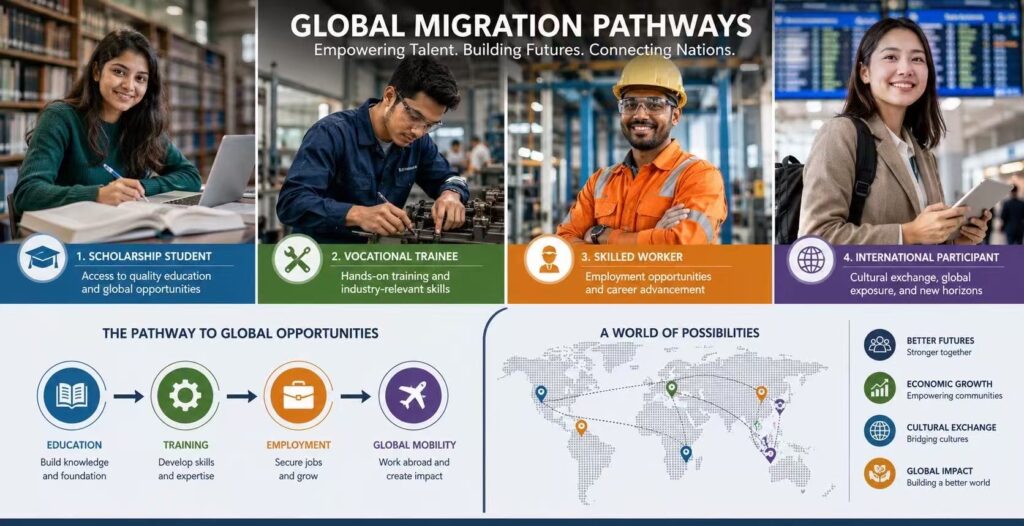
- The Four Main Ways People Move Abroad Without Significant Savings
- Eligibility Requirements You Should Know Before Applying
- Germany Ausbildung Program
- Romanian Government Scholarship
- Austria Job Seeker Visa
- Finnish Vocational Colleges
- Japan JET Programme
- ARICE Scholarship Program
- WIPO Young Experts Program
- Erasmus Mundus Scholarships
- DAAD Scholarships Germany
- Government Scholarships in Hungary
- Countries That Offer the Best Opportunities for People With Limited Financial Resources
- International Volunteer Programs
- How to Choose the Right Opportunity
- Common Mistakes to Avoid
- Scholarship and Visa Scam Warning: How to Protect Yourself When Applying Abroad
- How to Build a Strong Application That Gets Selected
- Estimated Costs You May Still Need to Cover
- Frequently Asked Questions
- Final Thoughts
- Author bio
- Sources and References
Who This Guide Is For
This guide is designed for individuals who want to build a better future abroad but may have limited financial resources.
It is especially useful for:
- Recent secondary school graduates seeking affordable international education opportunities.
- University graduates searching for scholarships, internships, and global career pathways.
- Skilled workers looking for employment opportunities abroad.
- Individuals interested in vocational training programs that offer salaries while studying.
- Young professionals seeking international experience through government-sponsored programs.
Regardless of your educational background or current financial situation, there are pathways that may help you achieve your goal of living, studying, or working abroad.

Why Most People Believe Moving Abroad Is Impossible
Many people abandon their dream of living abroad before they even begin researching opportunities. The assumption is often that international relocation requires tens of thousands of dollars in savings, expensive university tuition, or wealthy family support.
While some migration routes do require substantial financial resources, many governments, employers, universities, and international organizations actively seek talented individuals from around the world and are willing to cover significant portions of the associated costs.
The reality is that relocation opportunities generally fall into four categories:
- Fully funded scholarships
- Employer-sponsored migration
- Paid vocational training programs
- International exchange and development programs
Understanding these pathways can dramatically change your prospects and open doors that many people never realize exist.
Can You Really Move Abroad Without Money?
The short answer is yes—but not entirely without preparation.
Most successful relocation pathways cover major expenses such as:
- Tuition fees
- Accommodation
- Monthly living expenses
- Health insurance
- Visa sponsorship
- Airfare
The key is understanding which opportunities match your qualifications and long-term goals.
The Four Main Ways People Move Abroad Without Significant Savings
Before exploring specific opportunities, it is important to understand the four major relocation routes available.
1. Scholarships
Governments and universities fund students through tuition waivers, stipends, accommodation support, and travel grants.
Examples include:
- Romanian Government Scholarship
- Erasmus Mundus
- DAAD
- Stipendium Hungaricum
2. Employer Sponsorship
Employers recruit international workers and sponsor work permits.
Examples include:
- Nursing jobs
- Skilled trades
- IT positions
3. Vocational Training
Countries facing labor shortages often invest in training international workers.
Examples include:
- Germany Ausbildung
- Finnish Vocational Colleges
4. International Programs
International organizations recruit young professionals and graduates.
Examples include:
- JET Programme
- WIPO Young Experts Program
Understanding these categories helps applicants focus on opportunities that align with their goals.
Eligibility Requirements You Should Know Before Applying
While every opportunity has unique requirements, applicants should generally be prepared to meet some of the following criteria:
- Valid passport
- Educational certificates and transcripts
- Curriculum Vitae (CV)
- Motivation or personal statement
- Recommendation letters
- Language proficiency evidence where required
- Clean criminal record
- Good health status
Applicants should carefully review official guidelines for each opportunity before submitting an application.
Meeting the minimum eligibility requirements does not guarantee selection, but thorough preparation can significantly improve your chances.

1. Germany Ausbildung (Vocational Training Program)
Germany’s Ausbildung program remains one of the strongest migration pathways for individuals who want practical training and employment opportunities rather than a traditional university degree.
Unlike many academic programs, Ausbildung combines classroom learning with paid work experience.
Popular Fields
- Nursing
- Elderly Care
- Hospitality
- Information Technology
- Mechatronics
- Electrical Engineering
- Logistics
Benefits
- Monthly salary during training
- Residence permit
- Practical work experience
- Strong employment prospects
- Pathway to permanent residence
Official Information:
Make it in Germany Vocational Training Portal

2. Romanian Government Scholarship
One of Europe’s most underrated opportunities is the Romanian Government Scholarship.
The program attracts students from non-EU countries and provides substantial financial support for undergraduate, master’s, and doctoral studies.
Benefits
- Full tuition coverage
- Monthly stipend
- Accommodation support
- Access to European education
- No IELTS requirement in many cases
Available Levels
- Bachelor’s Degree
- Master’s Degree
- PhD
Official Information:
Romanian Ministry of Foreign Affairs Scholarship Portal

3. Austria Job Seeker Visa
The Austria Job Seeker Visa offers qualified professionals a unique opportunity to enter Austria without first securing a job offer.
Once in Austria, successful applicants can search for employment and transition to a work permit after obtaining suitable employment.
Benefits
- No job offer required initially
- Access to Austria’s labor market
- Potential pathway to long-term residence
- Opportunity to network directly with employers
Official Information:

4. Finnish Vocational Colleges
Many aspiring migrants overlook vocational education despite its excellent career outcomes.
Finnish vocational colleges provide practical training aligned with labor market demands.
Popular Areas
- Healthcare
- Construction
- Hospitality
- ICT
- Manufacturing
Official Information:

5. Japan Exchange and Teaching (JET) Programme
The JET Programme is widely regarded as one of the world’s best government-sponsored teaching opportunities.
Participants teach English while experiencing life in Japan.
Benefits
- Annual salary approximately ¥3.3–3.9 million
- Flight provided
- Visa sponsorship
- Health insurance
- Cultural immersion
Official Information:
JET Programme Official Website
6. ARICE Scholarship Program
The Romanian Agency for Investments and Foreign Trade (ARICE) offers scholarship opportunities to international students seeking higher education in Romania.
Benefits
- Tuition support
- International exposure
- Access to European education systems
- Career development opportunities
Monitor announcements regularly for application updates.

7. WIPO Young Experts Program
The World Intellectual Property Organization (WIPO) Young Experts Program provides exceptional graduates with international professional experience.
Benefits
- Competitive financial support
- International work experience
- Professional development
- Global networking opportunities
Official Information:
World Intellectual Property Organization Young Experts Program.
8. Erasmus Mundus Joint Master’s Scholarships
One of the most prestigious scholarship programs available globally.
Benefits
- Full tuition
- Monthly stipend
- Travel allowance
- Study in multiple European countries
9. DAAD Scholarships Germany
The German Academic Exchange Service supports international students pursuing postgraduate studies in Germany.
DAAD-scholarships-what-you-should-know
Benefits
- Tuition support
- Monthly stipend
- Research funding
- International networking
10. Hungary Government Scholarships (Stipendium Hungaricum)
Another highly competitive fully funded scholarship option.
Benefits
- Tuition waiver
- Accommodation support
- Monthly allowance
- Health insurance
Countries That Offer the Best Opportunities for People With Limited Financial Resources
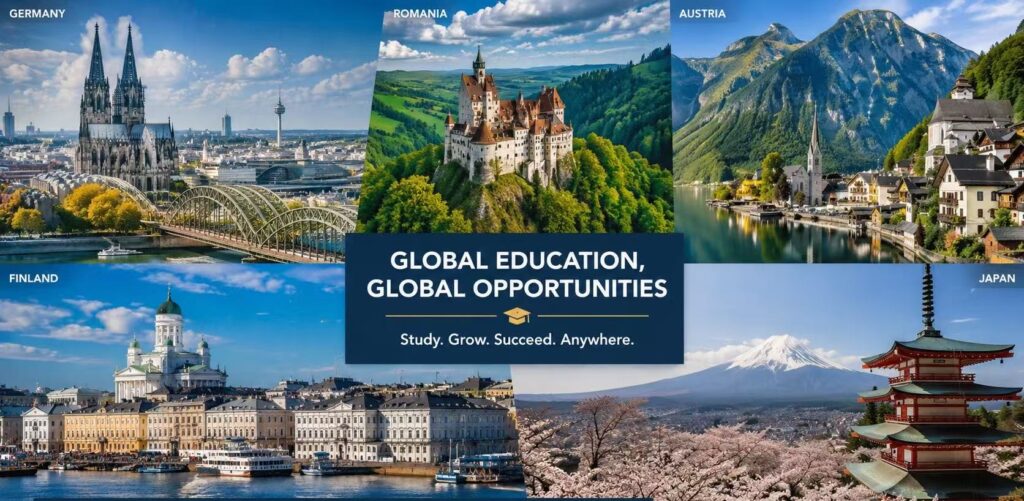
Some countries have built strong systems specifically designed to attract international students, workers, and trainees.
Germany
Known for:
- Ausbildung programs
- DAAD scholarships
- Skilled worker pathways
Romania
Known for:
- Government scholarships
- Affordable living costs
Austria
Known for:
- Job Seeker Visa
- Strong labor market
Finland
Known for:
- Vocational education
- Innovation-driven economy
Japan
Known for:
- JET Programme
- Teaching opportunities
These countries consistently rank among the most accessible destinations for ambitious individuals with limited financial resources.
| Opportunity | Study | Work | Salary | Scholarship | Visa Support |
|---|---|---|---|---|---|
| Germany Ausbildung | ✓ | ✓ | ✓ | — | ✓ |
| Romania Scholarship | ✓ | — | Stipend | ✓ | ✓ |
| Austria Job Seeker Visa | — | ✓ | ✓ | — | ✓ |
| Finland Vocational Colleges | ✓ | ✓ | Sometimes | Partial | ✓ |
| JET Programme | — | ✓ | ✓ | — | ✓ |
| ARICE Scholarship | ✓ | — | Stipend | ✓ | ✓ |
| WIPO Young Experts | — | ✓ | ✓ | — | ✓ |
| Erasmus Mundus | ✓ | — | Stipend | ✓ | ✓ |
| DAAD | ✓ | — | Stipend | ✓ | ✓ |
| Stipendium Hungaricum | ✓ | — | Stipend | ✓ | ✓ |
How to Choose the Right Opportunity
Ask yourself:
Do you want to study?
Consider:
- Romanian Government Scholarship
- Erasmus Mundus
- DAAD
- Hungary Scholarships
Do you want to work?
Consider:
- Germany Ausbildung
- Austria Job Seeker Visa
- JET Programme
Do you want international professional experience?
Consider:
- WIPO Young Experts Program
Common Mistakes to Avoid
Many applicants fail because they:
1. Wait Too Long
Opportunities often close months before program start dates.
2. Ignore Official Sources
Always verify information through official websites.
3. Submit Generic Applications
Tailor every CV, personal statement, and application.
4. Fail to Prepare Documents Early
Prepare:
- Passport
- Academic transcripts
- Recommendation letters
- Language certificates
- CV
Scholarship and Visa Scam Warning: How to Protect Yourself When Applying Abroad
As international education, scholarship, and migration opportunities continue to grow in popularity, so does the number of fraudulent schemes targeting hopeful applicants.
Every year, thousands of students, graduates, and job seekers lose significant amounts of money to fake scholarship offers, fraudulent visa agents, and deceptive recruitment agencies that promise guaranteed opportunities abroad.
If you are planning to study, work, or relocate internationally, understanding how these scams operate is essential to protecting your finances, personal information, and future opportunities.
Why Scholarship and Visa Scams Are So Common
Scammers often target individuals who are eager to secure life-changing opportunities abroad. They exploit the fact that many applicants are unfamiliar with official procedures, visa requirements, and scholarship application processes.
Fraudulent operators frequently create convincing websites, fake social media pages, forged acceptance letters, and misleading advertisements that appear legitimate at first glance.
Their goal is usually to collect money, personal information, or both.
Common Scholarship Scams to Watch Out For
Be cautious if you encounter any scholarship offer that displays the following warning signs:
Guaranteed Scholarship Awards
Legitimate scholarship providers do not guarantee selection before reviewing applications.
If an organization promises that you have already been selected before completing the application process, it should raise immediate concern.
Requests for Large Upfront Payments
Most genuine scholarship programs do not require applicants to pay large sums of money to receive funding.
While some programs may charge small application or processing fees, excessive payment requests are often a red flag.
Unofficial Communication Channels
Be cautious when scholarship notifications come exclusively through personal social media accounts, messaging apps, or unofficial email addresses.
Legitimate organizations typically communicate through official institutional domains and verified platforms.
Unrealistic Benefits
If a scholarship claims to provide unlimited funding, guaranteed permanent residency, or immediate citizenship with little effort, it is likely fraudulent.
Always verify extraordinary claims through official sources.
Common Visa and Immigration Scams
Visa-related fraud is another major concern for international applicants.
Guaranteed Visa Approval
No individual, consultant, or agency can guarantee that a visa will be approved.
Visa decisions are made by authorized immigration authorities, embassies, or consulates.
Anyone promising guaranteed approval should be approached with extreme caution.
Fake Job Offers
Some scammers create fake employment opportunities abroad and use them to collect fees from applicants.
Always verify employers through official company websites and confirm that recruitment activities are legitimate.
Fraudulent Immigration Agents
Some unauthorized agents charge substantial fees while providing inaccurate information or submitting fraudulent documents.
Using false documents can result in visa refusal, travel bans, or legal consequences.
How to Verify Opportunities Before Applying
Before submitting any application or making any payment, take the following steps:
Visit Official Websites
Always verify information through official government, university, employer, or organizational websites.
Official websites typically provide accurate application procedures, eligibility requirements, and contact information.
Research the Organization
Conduct independent research about the institution offering the opportunity.
Check reviews, news articles, official announcements, and publicly available information.
Confirm Contact Information
Legitimate organizations generally provide verifiable contact details, including official email addresses, physical offices, and telephone numbers.
Verify Deadlines and Requirements
Cross-check application deadlines and eligibility criteria across multiple official sources whenever possible.
Best Practices for Staying Safe
To reduce your risk of becoming a victim of fraud:
- Never pay large sums of money to secure a scholarship.
- Do not share sensitive personal documents with unverified individuals.
- Avoid offers that promise guaranteed visas or admissions.
- Keep copies of all communications and application records.
- Verify opportunities through official channels before making financial commitments.
- Seek advice from trusted educational institutions or government agencies when uncertain.
Final Advice
Legitimate scholarships, work opportunities, and immigration pathways can genuinely transform lives, but they require patience, preparation, and careful verification.
Whenever you encounter an opportunity that seems too good to be true, take time to investigate thoroughly before proceeding.
A few minutes of verification can save months of disappointment, financial loss, and unnecessary complications.
Remember: genuine opportunities are earned through proper application processes, not purchased through promises of guaranteed success.

How to Build a Strong Application That Gets Selected
Competition for international opportunities is increasing every year.
Successful applicants often stand out because they invest time in preparing quality applications.
Key Elements of a Strong Application
Professional CV
Highlight:
- Education
- Work experience
- Volunteer work
- Skills
- Certifications
Personal Statement
Explain:
- Why you are applying
- Your long-term goals
- How the opportunity fits your career path
Recommendation Letters
Strong recommendations can significantly improve your chances of selection.
Supporting Documents
Ensure every document is accurate, organized, and professionally presented.
Remember that many opportunities are lost not because candidates lack qualifications but because their applications are incomplete or poorly prepared.
Essential Documents You Should Start Preparing Today
Even before applications open, prepare:
| Document | Why It Matters |
|---|---|
| Passport | Required for all international applications |
| CV/Resume | Needed for scholarships and jobs |
| Academic Transcripts | Educational verification |
| Recommendation Letters | Strengthens applications |
| Motivation Letter | Critical for selection |
| Language Certificates | May improve competitiveness |
| Police Clearance | Required by some programs |
| Medical Reports | Often needed for visas |
Application Timeline for Moving Abroad
| Time Before Departure | Action |
|---|---|
| 12 Months | Research opportunities |
| 10 Months | Gather documents |
| 8 Months | Submit applications |
| 6 Months | Attend interviews |
| 4 Months | Receive results |
| 3 Months | Apply for visa |
| 2 Months | Book travel |
| 1 Month | Final preparations |
Estimated Costs You May Still Need to Cover
Although many opportunities are fully funded, applicants should understand that some expenses may still exist.
| Expense | Typical Cost |
|---|---|
| Passport | Varies by country |
| Document Translation | Varies |
| Medical Examination | Country dependent |
| Police Clearance | Country dependent |
| Visa Processing | Sometimes waived |
| Emergency Funds | Recommended |
Even fully funded programs may require applicants to cover small upfront expenses before reimbursement.
Planning ahead can prevent unexpected financial challenges.

Frequently Asked Questions (FAQ)
Can I Move Abroad Without Any Money?
Completely free relocation is rare. However, many opportunities cover tuition, accommodation, travel, and living expenses, significantly reducing the financial burden.
Which Country Is Easiest to Move To Without Money?
Germany, Romania, Hungary, Finland, and Japan offer some of the most accessible pathways through scholarships, vocational training, and sponsored programs.
Do I Need IELTS?
Not always.
Several scholarship programs and vocational opportunities accept alternative proof of English proficiency or do not require IELTS at all.
Can I Relocate Without a University Degree?
Yes.
Programs such as Germany’s Ausbildung and various vocational training routes are specifically designed for individuals without university degrees.
How Long Does the Process Take?
Depending on the program, the entire process can take between six months and two years.
Action Plan: What You Should Do Next

If you are serious about moving abroad, start with these steps today:
Step 1
Obtain or renew your passport.
Step 2
Prepare your CV and motivation letter.
Step 3
Gather academic transcripts and certificates.
Step 4
Create a spreadsheet to track opportunities and deadlines.
Step 5
Apply consistently rather than waiting for the “perfect” opportunity.
Step 6
Follow official government and scholarship websites regularly.
The people who successfully relocate abroad are rarely the most talented—they are often the most prepared and persistent.
Conclusion
Moving abroad does not always require substantial personal savings. Around the world, governments, universities, international organizations, and employers continue to invest in talented individuals through scholarships, vocational training programs, employment pathways, and professional development initiatives.
Whether your goal is studying in Europe, working in Germany, teaching in Japan, or gaining international experience through global organizations, opportunities exist for those willing to prepare early and apply strategically.
The most important step is not finding money first—it is finding the right opportunity and taking action before application deadlines arrive.
About Suretripacademia
SureTripAcademia publishes educational, scholarship, relocation, immigration, career, and international opportunity guides designed to help readers access life-changing opportunities around the world. Our mission is to provide accurate, practical, and actionable information that empowers students, graduates, and professionals to pursue global education and career pathways.
Related Guides You May Find Helpful
- https://suretripacademia.com/top-universities-in-europe-with-low-tuition-fees-the-ultimate-guide-for-international-students/
- https://suretripacademia.com/university-of-tokyo-mext-scholarship-2028-intake-complete-guide-for-international-students/
- https://suretripacademia.com/construction-jobs-abroad-complete-guide-for-international-workers/
- https://suretripacademia.com/healthcare-jobs-in-europe-and-western-countries-complete-guide-for-international-medical-professionals/
- https://suretripacademia.com/flinders-university-research-scholarship-in-australia-2026-complete-guide-for-international-students/
- https://suretripacademia.com/manaaki-new-zealand-government-scholarship-fully-funded-study-abroad-opportunity-for-international-students/.
Sources and References
This article is based on information from official government immigration portals, scholarship authorities, international organizations, vocational education agencies, and publicly available program guidelines.
Readers are encouraged to verify current eligibility requirements, application deadlines, funding details, and visa regulations through the official websites of each program before applying.