
Introduction
Artificial Intelligence (AI) is transforming nearly every aspect of modern life. From healthcare and education to finance and transportation, AI-powered tools are changing how people work, learn, and solve problems. As AI becomes increasingly capable of performing tasks once reserved for highly educated professionals, an important question is emerging among students, parents, employers, and educators:
Will artificial intelligence make university degrees less valuable?
The concern is understandable. AI can write essays, generate computer code, analyze data, create marketing campaigns, answer customer inquiries, and even assist with medical diagnoses. Some people believe traditional university education may become less important as AI tools continue to improve.
However, the reality is far more complex.
Rather than eliminating the value of university degrees entirely, AI is changing what makes education valuable. The future will likely favor graduates who combine academic knowledge with adaptability, critical thinking, creativity, leadership, and AI literacy.
In this comprehensive guide, we explore how artificial intelligence is affecting higher education, employment opportunities, university degrees, and what students can do to remain competitive in the rapidly evolving global workforce.
Table of Contents
- What Artificial Intelligence Is
- Quick Answer: Will Artificial Intelligence Make University Degrees Less Valuable?
- Why People Think Degrees May Lose Value
- Degree Only vs Degree Plus AI Skills
- How AI Is Changing the Job Market
- Real-World Examples of AI in Different Professions
- Which Degrees Are Most Likely to Be Affected
- Degrees That Will Remain Highly Valuable
- What Employers Really Want in the AI Era
- The Future of Universities
- Benefits of University Education Beyond Employment
- Skills Students Must Develop Alongside Their Degrees
- Common Misconceptions About AI and Education
- Careers Most Resistant to AI Disruption
- Frequently Asked Questions
- Expert Predictions for the Future
- What Higher Education May Look Like by 2035
- Key Takeaways
- Student Action Plan: Preparing for an AI-Powered Future
- Final Verdict
- Related Resources
What Artificial Intelligence Is
Artificial Intelligence refers to computer systems capable of performing tasks that typically require human intelligence.
Examples include:
- Language generation
- Image creation
- Speech recognition
- Data analysis
- Predictive modeling
- Decision support systems
- Process automation
Popular AI tools now assist professionals across multiple industries, helping them work faster and more efficiently.
AI is not simply another technology trend. Many experts consider it one of the most significant technological shifts since the invention of the internet.
Quick Answer: Will Artificial Intelligence Make University Degrees Less Valuable?
Artificial Intelligence is unlikely to make university degrees obsolete. Instead, AI is changing what employers value most. Degrees combined with practical skills, AI literacy, communication abilities, leadership experience, and real-world problem-solving skills will remain highly valuable in the future workforce.
The graduates most likely to succeed are not those who compete against AI, but those who learn how to use AI effectively to improve their productivity, creativity, and decision-making.
Why People Think Degrees May Lose Value
Several factors have contributed to concerns about the future value of university education.
AI Can Perform Knowledge-Based Tasks
Tasks that once required years of specialized training can now be assisted by AI.
Examples include:
- Drafting reports
- Coding software
- Creating presentations
- Research assistance
- Data interpretation
Employers Are Prioritizing Skills
Many companies increasingly evaluate applicants based on:
- Demonstrated skills
- Project portfolios
- Certifications
- Work experience
rather than degrees alone.
Alternative Learning Platforms Are Growing
Students can now learn through:
- Online courses
- Professional certifications
- Industry bootcamps
- Skill-based training programs
often at lower costs than traditional university education.
Degree Only vs Degree Plus AI Skills
| Factor | Degree Only | Degree + AI Skills |
|---|---|---|
| Employability | Good | Excellent |
| Salary Potential | Moderate | Higher |
| Future Readiness | Moderate | High |
| Adaptability | Moderate | High |
| Global Career Opportunities | Good | Excellent |
| Productivity | Moderate | Significantly Higher |
| Competitive Advantage | Moderate | Strong |
This comparison highlights an important reality: the future is unlikely to favor individuals with no education, but rather those who combine formal education with technological competence.
How AI Is Changing the Job Market
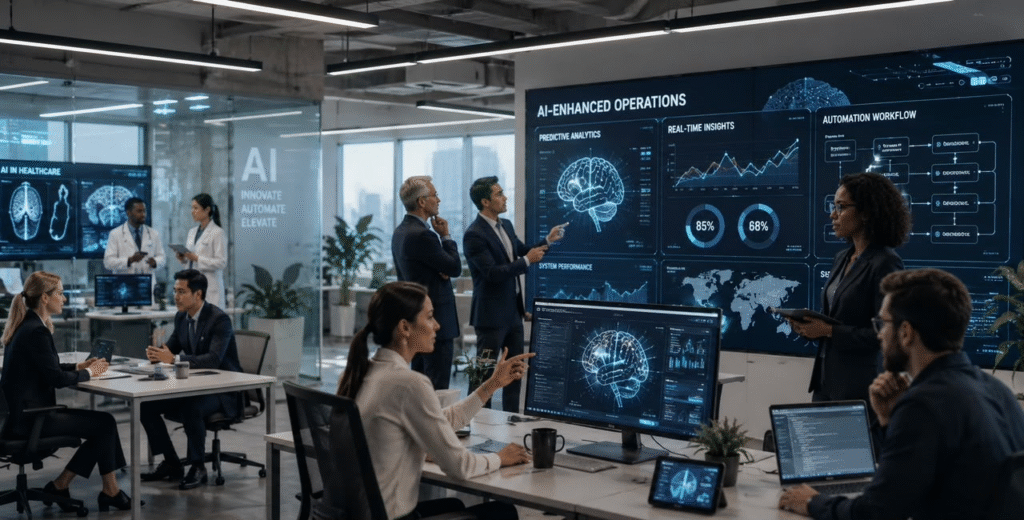
AI is not simply replacing jobs.
It is transforming jobs.
Most professions are experiencing one of three outcomes:
Automation
Certain repetitive tasks become automated.
Examples:
- Data entry
- Routine customer service
- Basic administrative work
Augmentation
AI assists professionals but does not replace them.
Examples:
- Doctors using AI diagnostic tools
- Lawyers using AI research systems
- Engineers using AI design software
Creation of New Roles
Entirely new career paths are emerging.
Examples:
- AI Specialists
- Prompt Engineers
- AI Ethics Consultants
- Machine Learning Engineers
- AI Product Managers
- Data Scientists
Real-World Examples of AI in Different Professions
Many people assume AI will completely replace professionals. In reality, most industries are adopting AI as a tool rather than a replacement.
Healthcare
AI can assist doctors in analyzing medical images and identifying patterns in patient data.
However, physicians still provide:
- Clinical judgment
- Ethical decision-making
- Patient communication
- Treatment planning
Law
AI can quickly analyze legal documents and assist with research.
However, lawyers remain responsible for:
- Legal interpretation
- Court representation
- Negotiation
- Strategic advice
Software Engineering
AI can generate code and identify errors.
However, engineers still design systems, manage projects, and solve complex technical problems.
Education
AI can help create lesson plans and learning materials.
Teachers still provide mentorship, motivation, classroom management, and personalized support.
Business Management
AI can generate reports and forecasts.
Business leaders still make strategic decisions, manage teams, and drive organizational growth.
Which Degrees Are Most Likely to Be Affected?
Some degree programs may face greater disruption because portions of their work can be automated.
Examples include:
Basic Administrative Studies
Routine administrative tasks are increasingly automated.
General Data Processing
Many repetitive data tasks can now be completed by AI systems.
Entry-Level Content Production
AI-generated content is becoming increasingly common.
However, this does not mean these degrees become useless.
Rather, graduates will need additional skills to remain competitive.
Degrees That Will Remain Highly Valuable
Certain professions require human judgment, ethics, interpersonal communication, and complex decision-making.
These areas are expected to remain highly valuable.
Medicine
Healthcare professionals perform tasks AI cannot fully replicate.
Examples:
- Patient care
- Ethical decisions
- Clinical judgment
- Emotional support
Nursing
Human interaction remains central to nursing practice.
Engineering
Engineers design, innovate, supervise, and solve complex real-world problems.
Law
Legal interpretation and advocacy require human expertise.
Education
Teachers provide mentorship, guidance, and social development.
Business Leadership
Organizations still require leaders capable of managing people, strategy, and culture.
What Employers Really Want in the AI Era
The future workforce will not be divided between people with degrees and people without degrees.
Instead, it will likely be divided between those who can effectively use AI and those who cannot.
Employers increasingly seek candidates with:
Problem-Solving Skills
The ability to identify and solve complex challenges.
Communication Skills
Written and verbal communication remain critical.
Critical Thinking
AI can generate information, but humans must evaluate its accuracy.
Leadership
Organizations need individuals capable of managing teams and making strategic decisions.
AI Literacy
Understanding how to use AI effectively is becoming a major advantage.
The Future of Universities
Universities are already adapting.
Many institutions are introducing:
- AI-related courses
- Data science programs
- Digital skills training
- Technology-focused research opportunities
Future universities may place greater emphasis on:
Practical Learning
Real-world projects and hands-on experience.
Industry Partnerships
Collaboration with employers.
Lifelong Learning
Continuous education beyond graduation.
Benefits of University Education Beyond Employment
A degree provides more than job qualifications.
Students also gain:
Professional Networks
Relationships with professors, mentors, and peers.
Personal Development
University experiences help build confidence and maturity.
Research Skills
Students learn how to analyze information critically.
Global Opportunities
Many employers and immigration systems continue to value recognized degrees.
Skills Students Must Develop Alongside Their Degrees
Students should not rely solely on academic qualifications.
The strongest candidates combine degrees with practical skills.
Recommended areas include:
Artificial Intelligence Tools
Learn:
- AI-assisted research
- AI productivity tools
- Prompt engineering
- Automation platforms
Digital Skills
Examples:
- Data analytics
- Programming
- Digital marketing
- Cybersecurity
Communication
Strong communication remains one of the most valuable career assets.
Leadership
Volunteer work, internships, and student organizations help build leadership experience.
Adaptability
The future job market will continue changing rapidly.
Common Misconceptions About AI and Education
Myth 1: AI Will Replace All Jobs
Reality:
AI will change jobs more often than it eliminates them.
Myth 2: Degrees Will Become Useless
Reality:
Degrees remain valuable, particularly when combined with practical skills.
Myth 3: Employers Only Care About Skills
Reality:
Many employers value both formal education and practical competence.
Myth 4: AI Knows Everything
Reality:
AI systems can make mistakes and produce inaccurate information.
Human oversight remains essential.
Careers Most Resistant to AI Disruption
While no profession is completely immune to technological change, some careers are expected to remain highly resilient because they require complex human interaction, emotional intelligence, creativity, and ethical judgment.
Medicine
Doctors will continue to play critical roles in diagnosis, treatment, and patient care.
Nursing
Patient interaction, empathy, and clinical care remain difficult to automate.
Engineering
Engineers solve unique real-world challenges that require innovation and creativity.
Cybersecurity
As technology evolves, cybersecurity professionals remain essential for protecting digital systems.
Psychology
Human emotional understanding and therapeutic relationships remain highly valuable.
Skilled Trades
Electricians, plumbers, construction specialists, and technicians perform complex physical tasks that AI cannot easily replicate.
Teaching
Education requires human guidance, mentorship, and social development.
Business Leadership
Organizations need leaders who can inspire teams, manage change, and make strategic decisions.
Frequently Asked Questions
Should I still go to university?
For many career paths, yes. University education remains valuable, especially when combined with practical skills.
What degree is safest from AI disruption?
No degree is completely immune to technological change, but healthcare, engineering, law, education, and leadership-oriented fields remain highly resilient.
Will AI replace professors?
AI may assist teaching, but mentorship, assessment, and human interaction remain important.
Should students learn AI?
Absolutely.
AI literacy is becoming an important professional skill across nearly every industry.
Is a degree still worth the investment?
For many professions and career paths, yes. However, students should prioritize employability skills alongside academic qualifications.
Expert Predictions for the Future
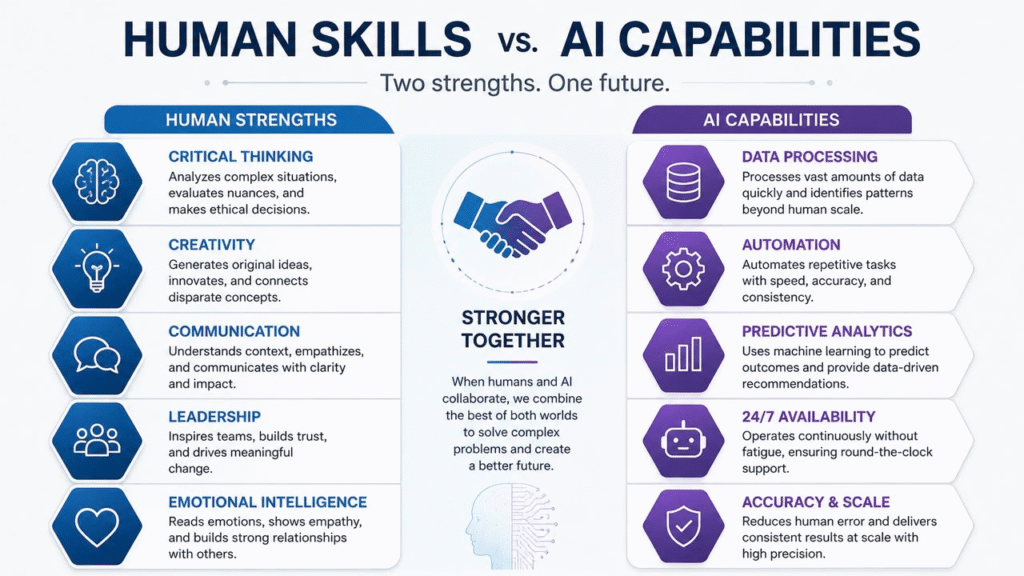
Many experts believe the future belongs to individuals who can work alongside AI rather than compete against it.
The most successful professionals will likely be those who combine:
- Academic knowledge
- Technical skills
- Human creativity
- Emotional intelligence
- Leadership ability
- AI proficiency
Rather than replacing education, AI is likely to reshape how education is delivered and how graduates prepare for careers.
What Higher Education May Look Like by 2035
The future university experience may be significantly different from today’s model.
Possible developments include:
AI-Powered Tutors
Students may receive personalized academic support 24 hours a day.
Personalized Learning Paths
Courses may adapt to each student’s learning style and pace.
More Skills-Based Education
Universities may place greater emphasis on practical competencies.
Industry Partnerships
Students may gain more workplace experience during their studies.
Lifelong Learning Models
Graduates may continue updating their skills throughout their careers.
The institutions most likely to thrive will be those that combine academic rigor with practical, technology-driven learning experiences.
Key Takeaways
✔ Artificial Intelligence is transforming jobs rather than eliminating all professions.
✔ University degrees remain valuable when combined with practical skills.
✔ AI literacy is becoming an essential career skill.
✔ Communication, leadership, and critical thinking remain highly important.
✔ Students should learn to work alongside AI rather than compete against it.
✔ Lifelong learning will become increasingly important in the future workforce.
✔ The most successful graduates will combine education, adaptability, and technological competence.
Student Action Plan: Preparing for an AI-Powered Future
Students can take practical steps today to improve their future employability.
Year 1
- Learn basic AI concepts
- Improve digital literacy
- Develop communication skills
Year 2
- Build practical projects
- Learn data analysis tools
- Participate in extracurricular activities
Year 3
- Complete internships
- Gain leadership experience
- Learn industry-specific technologies
Year 4
- Build a professional portfolio
- Expand professional networks
- Develop advanced AI-related skills
The earlier students begin preparing, the greater their competitive advantage will be.
Final Verdict
Will artificial intelligence make university degrees less valuable?
The answer is both yes and no.
Degrees alone may become less powerful than they once were because employers increasingly value practical skills, experience, and adaptability.
However, university education itself remains highly valuable.
The future will belong to graduates who combine:
✔ Academic knowledge
✔ Practical experience
✔ Digital skills
✔ Critical thinking
✔ Communication abilities
✔ AI literacy
Students who embrace both education and technology will be better positioned to succeed in the AI-driven economy.
Rather than asking whether AI will replace degrees, a better question may be:
How can students use AI to become more effective graduates and professionals?
Those who answer that question successfully are likely to thrive in the years ahead.
Related Articles
- Scholarships That Cover Tuition, Accommodation and Flights
- Healthcare Jobs in Europe and Western Countries
- Construction Jobs Abroad
- Countries with Higher Visa Approval Rates
- Cheapest Universities in Europe
- University of Tokyo MEXT Scholarship
- Study in Iceland for Free
About SureTripAcademia
SureTripAcademia provides practical information on:
- Scholarships
- Study Abroad Opportunities
- International Admissions
- Student Visas
- Global Careers
- Immigration Pathways
- Education Technology Trends
Our mission is to help students and professionals make informed decisions about their academic and career futures.
What Do You Think?
Do you believe artificial intelligence will make university degrees:
- More valuable?
- Less valuable?
- Equally important?
- Unnecessary?
Share your thoughts and experiences in the comments section below. We would love to hear your perspective on the future of education and work.